
Writers Who Run: An Interview with Tracy Dimond
By Malissa Rodenburg
This is my second column back after taking time off to have my daughter (the first column was a memorable interview with Sandy Steinbrecher that I recommend you read if you haven’t yet). At the risk of being one of those people who muses about how parenthood changes a person, I’ve been surprised at the ways it’s changed how I think about creativity and how I practice being creative. I kind of thought one of two things would happen: 1. The creative well would be sucked dry and would remain so for the next eighteen years. 2. I would be flooded with this new understanding of what life is and its meaning and feel compelled to write great and profound works. Neither has turned out to be the case. I have felt pulled to write a lot of new material. Most of it has been fun, playful. Mostly quirky short stories. None of it has been very emotional.
What I haven’t felt compelled to write, however, has been poetry.
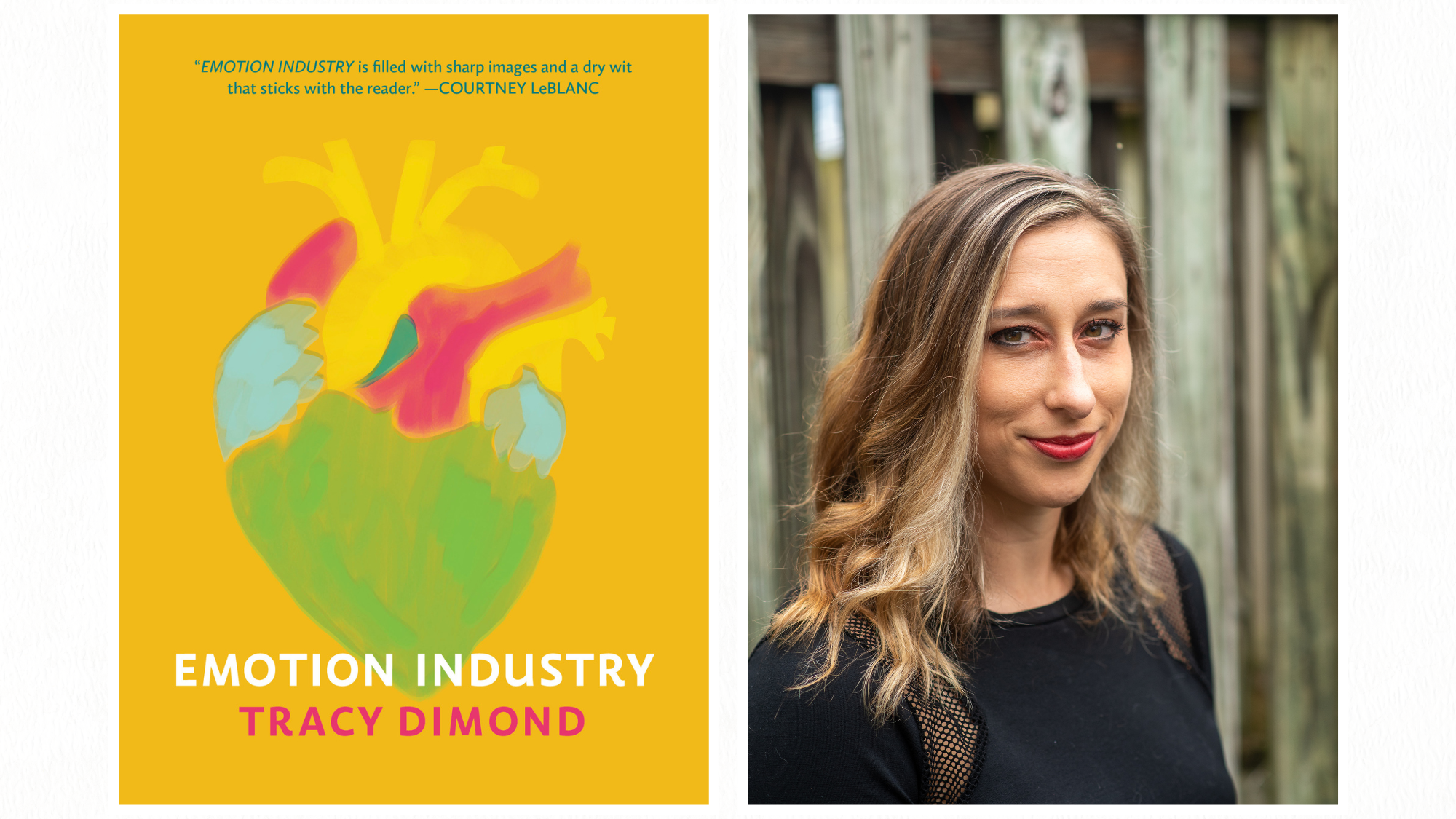
Until I finished reading “Emotion Industry” by Tracy Dimond, the author of four poetry chapbooks and this full length collection. I closed the soft, electric orange cover of the poetry collection and went straight into a Word Doc and wrote my first poem in, I’m not sure how long. More than eight months, at least.
Dimond’s poetry is emotional, but it’s also playful in a way that we all need as the world weighs heavier each day it seems. Her writing is raw and self conscious. It’s like your MySpace page still hanging out online waiting to be discovered as an artistic time capsule.
It was the way that Dimond experimented with form, played around with titles, and put herself on the page that inspired me to give it a go, too. And art that inspires us to also create art is the best kind, in my opinion.
If you’re reading this and have never given poetry much of a chance, Dimond’s work may feel familiar to you. Especially if you’re a listener of music. You may catch lyrics from My Chemical Romance, Kesha, and Third Eye Blind. As Dimond points out in our conversation, reading poetry is a lot like listening to music.
“When you look at Taylor Swift's fandom, her fans love deciphering things, and that's kind of what poetry can be,” she says.
And while she is writing about very real and serious topics (chronic illness, feminism, politics), Dimond captures the absurd hilarity of the time naturally. Take the line, “I have a crush on the world, / but it is not treating me well.” in LOVE TAN / LOVE TAN / LOVE TAN / LOVE TAN / LOVE.
In fact, it was that absurd attitude that drew her to the trail running community; where running an insane amount of miles in the wilderness is both “unhinged” and totally accepted.
“Poets are . . . a lot of us are just playing games with language. And there's a history of silliness, and surrealism. And then in trail running people are like, ‘Here's a quesadilla, let's go run up to this summit together,’” she says.
For more radical inspiration, early 2000s nostalgia, and to hear how running has shaped Dimond’s goal-setting process, read my conversation with the poet below.
The following interview has been edited for length and clarity.
First off, I was drawn to the pop culture references in your poetry. I feel like it gives us a window into who you are. Is that something you’ve always done in your writing?
I think maybe since I have just been conscious about my writing process, so right before I went to get my MFA. I've just been drawn to pop culture in this way that it is part of building our identity. And I do think about it a lot in terms of, like, “what does this mean for potential timelessness of the poems?” But then I also think you can't really predict that.
We’ve all, for the past few years, really been losing our minds about “This is Just to Say” [by William Carlos Williams], because of how much we love the cadence. Although it’s not a pop culture poem, none of us have ice boxes anymore, but we all get the poem. So I think, yeah, I’m really interested in how these things build our identity and are a part of us.”
I get that. I felt like reading “Grind My Bones Into Glitter, Then Swim Through the Shimmer” and “Sorry I Wrote So Many Sad Poems Today,” I could really pinpoint when the poems were written, which I thought was cool.
I hope people who didn't grow up getting dial up internet and watching some of those reality shows and living through the ME TOO era in that way—there's all these different things that were happening that I don't think I could have written those poems in the same way now, but I also do really love how that makes every poem a bit of a time capsule.
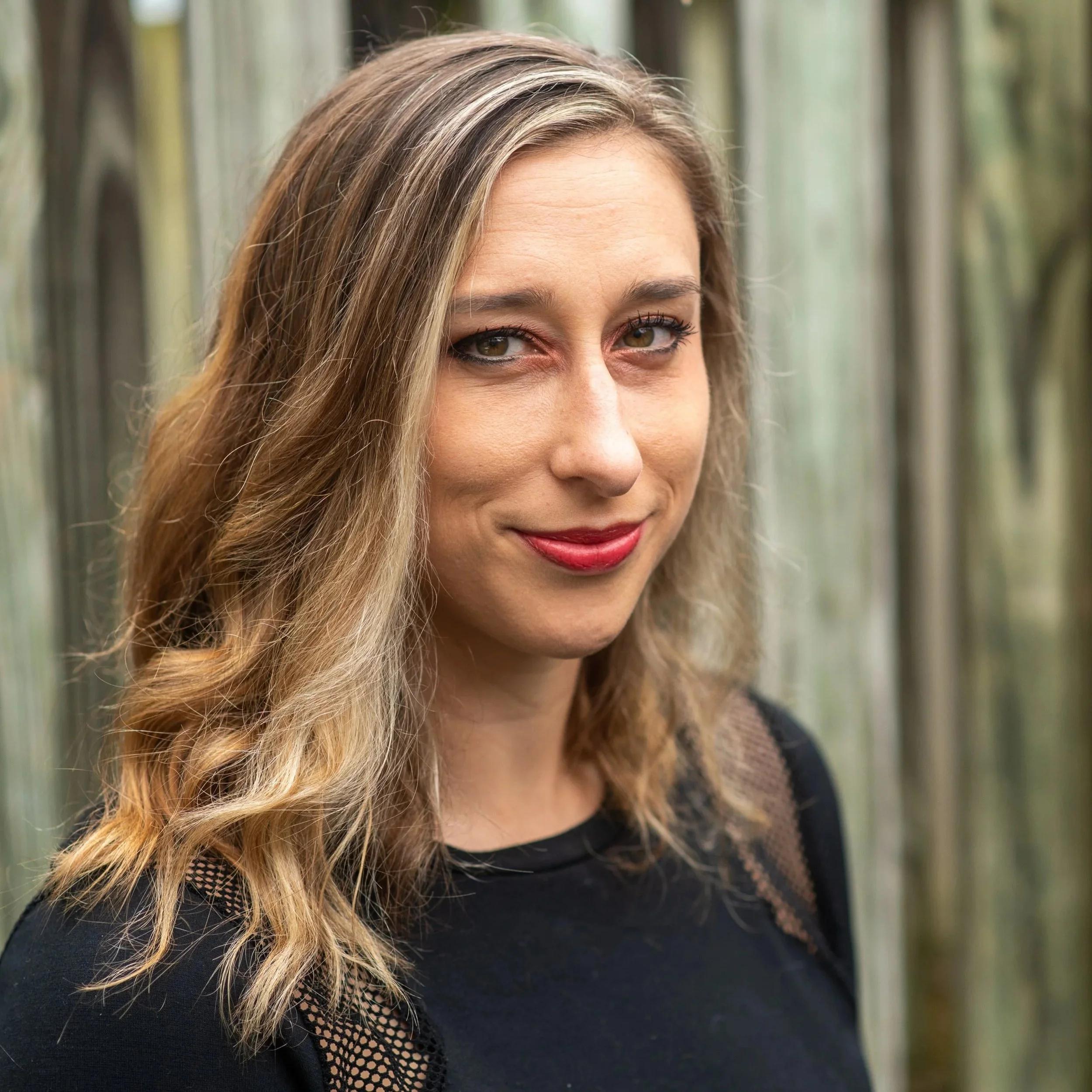
Tracy Dimond. Photo credit to Mollye Miller.
One really fun element of your work is the mashup concept, combining the voice of musical artists with famous poets. How did you come up with that?
Like many things that I do, it sort of started as a joke. Like my first collection, “Sorry I Wrote So Many Sad Poems Today,” started out as a text message to my friend Amanda, and then I wrote all these poems at the gym and she said, “Oh, this is so funny, we should publish it.” And that’s what we did.
I’m pretty sure I was probably joking about how Kesha is like a modern Sylvia Plath and got egged on by some friends to keep writing these mashups. Mashups were also getting big in music. The drummer from Third Eye Blind put out a mixtape of mashups of his drumming over different songs and I just kind of ran with that. Wherever I saw similarities in a poet and a musical artist I just played around with that, like Kesha and Sylvia Plath, Louise Glick and Marina, Allen Ginsburg and Third Eye Blind. I was really curious about how they would sound together and if you could really pull out the difference once they were mashed up.
Tell us about your writing process and how it relates to your running.
[My writing] is not a consistent process. I’m always taking notes either on my phone or in a notebook, depending on how I’m moving about in the world. Then I’ll go back and look at a batch of what I’ve taken notes on or observed and then piece things together. It’s like taking things that I’ve written or heard and then collaging it.
[The running is] so different. It’s very consistent. You have to train a certain way, or at least I do, to not get injured. I need to track my mileage every week, track my elevation, make sure I’m not doing anything too much or too fast for the health of my own body. The writing, the drafting process is a little more erratic.
I do have a goal for myself to submit writing once a month. I guess it is sort of like running, because it’s almost like having that race goal. I’ve gotta be working on something throughout the month to have something I feel confident enough to submit.
What are you working on next?
I have a second full length collection, sort of in a stack that I’m editing and organizing and looking at the themes of. It’s similar to “Emotion Industry,” but it’s also a little more like getting reacquainted with the body, where “Emotion Industry” was a lot of frustration and rage and disassociating. This is more like getting back to movement and feeling more of the world around you.
Speed Work:
In one word, what would you say 'Emotion Industry' is about?
Internal struggle
Where is your favorite place to run in Baltimore?
Druid Hill Park
Where is your favorite place to run outside of Baltimore?
Iceland. It’s beautiful and it’s not too hot.
If you could go on a run with any of the subjects you've written about in your poems, who would you choose?
Kesha, probably, just to get to spend time with her. I’m not even sure if she runs much, but I’ll say Kesha.
What are you reading right now?
I'm one of those people that's in the middle of lots of different things, and so just a couple I'm reading–and I've been reading it for a while–is Gail Marie Thompson's collection “Mountain Amnesia.” If she’s not someone you’ve looked at, Malissa, I think you’d really like her work, too.
And then I feel like, as a swimmer, it’s embarrassing that I haven’t read “The Chronology of Water” yet, in full, so I’m almost done with that and it’s gutting me. Now I’m even more excited about the movie adaptation that Kristen Stewart is doing.
Learn something new? Find a new book you can’t wait to crack the spine of? Consider buying the columnist a coffee.
Writers Who Run is a monthly column by Seattle-based reader, runner, writer, and bookseller Malissa Rodenburg.