
Writers Who Run: An Interview with Stephanie Reents
By Malissa Rodenburg
When running becomes a part of your life, it stays with you, long after you’ve stopped. You hold on to the feelings of accomplishment, the hard work done, and even the sensation of your legs in motion. At least, that’s been my experience in the short periods I’ve taken a break from the sport. As I’m returning to running currently, I’m amazed that my legs and lungs know what to do as I fall into pace.
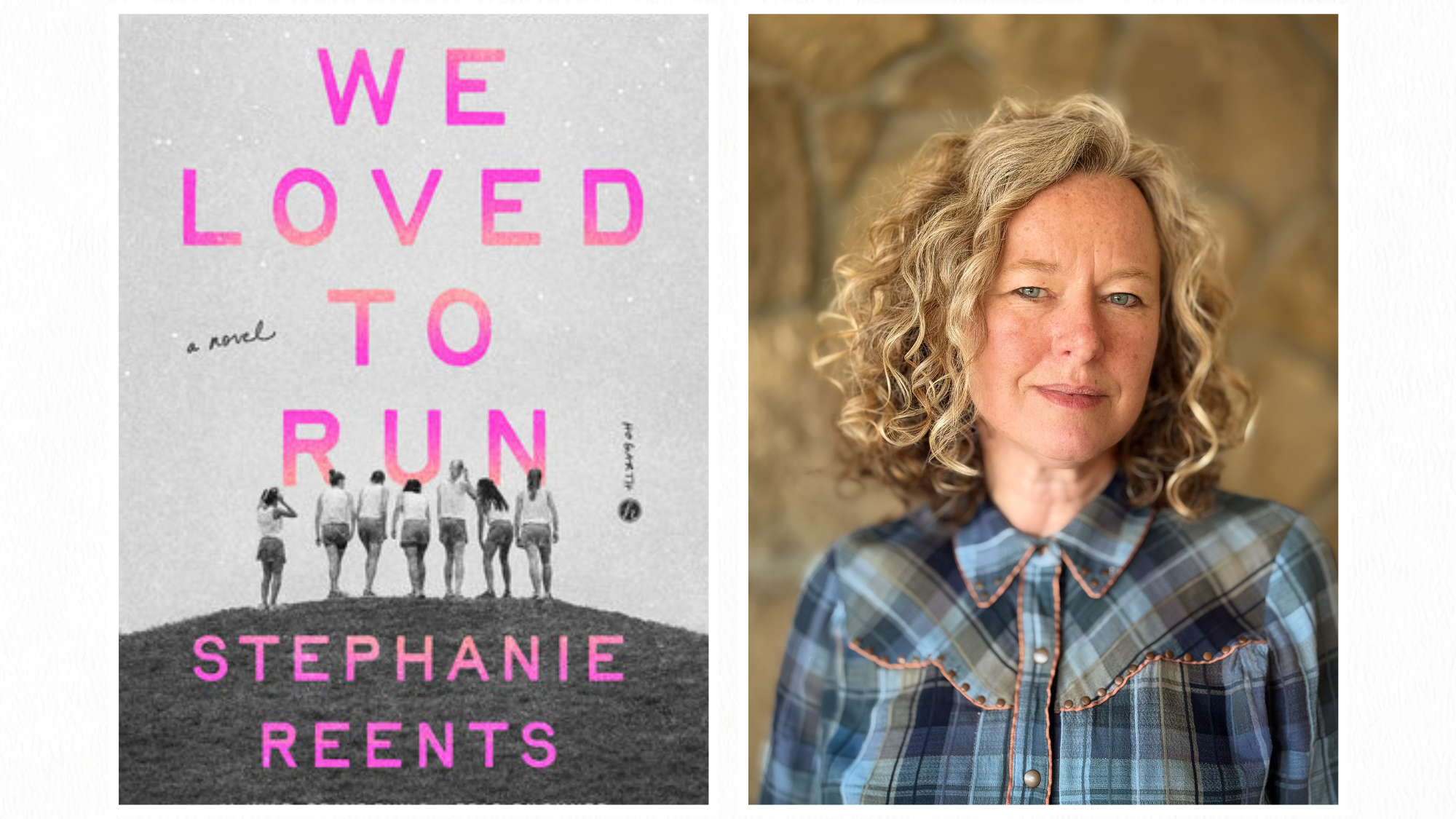
Author Stephanie Reents harnessed those long held memories in writing “We Loved to Run,” an ambitious novel about a competitive women’s cross country team and the drama that ensues over the course of a season surrounding a secret belonging to the team’s would-be running star. A former competitive runner herself, Reents was injured at the time of writing this novel but found the more she wrote, the more her experiences from college and marathon training came back.
I could point to passage after passage where Reents completely captures on the page, what it’s like to run. Like this one, late in the book: “Long runs could be like that, a stream-of-consciousness conversation, like having a dream with another person, or having a nightmare. Something happened to the brain when you were doing something highly rhythmic and repetitive with your body.”
Sure, you can geek out on the wholly lived running scenes, the action, the competitive spirit of the book, but to me, it was actually the characters that makes it worthy of your TBR-list. The cast of characters are distinct, diverse, and carry their own baggage wherever they go (like prankster Chloe’s odd relationship with her parents or Harriet’s struggles with disordered eating) even if they’re not the center of the story. And these details so clearly affect how they react to the novel’s various turning points.
Finally, those stories are told through a unique and almost perfect communal “we” voice belonging to the team. “[The team] has an identity that's bigger than or separate from the identities of the individual runners and it felt really liberating to find that voice,” says Reents. “When I started to write the novel, I realized how flexible the ‘we’ could be.”
In December, Reents joined me for a video interview where we discussed more about the inception of this point-of-view, her experiences running, and what a book that honestly and openly reveals the trials of the female athlete means to today’s runners and coaches.
The following interview has been edited for length and clarity.
The first thing I want to talk about is just the authenticity right from page one of “We Loved to Run.” If I didn’t already know your history as a runner, it would have become apparent from the intimate details within the prose. What was it like getting that lived experience onto the page?
It was really fun. I was a very serious cross country runner and track runner starting from junior high. I was lucky to be on a really good high school cross country team in Boise, Idaho. We won state my junior year and then I went on to college and ran competitively.
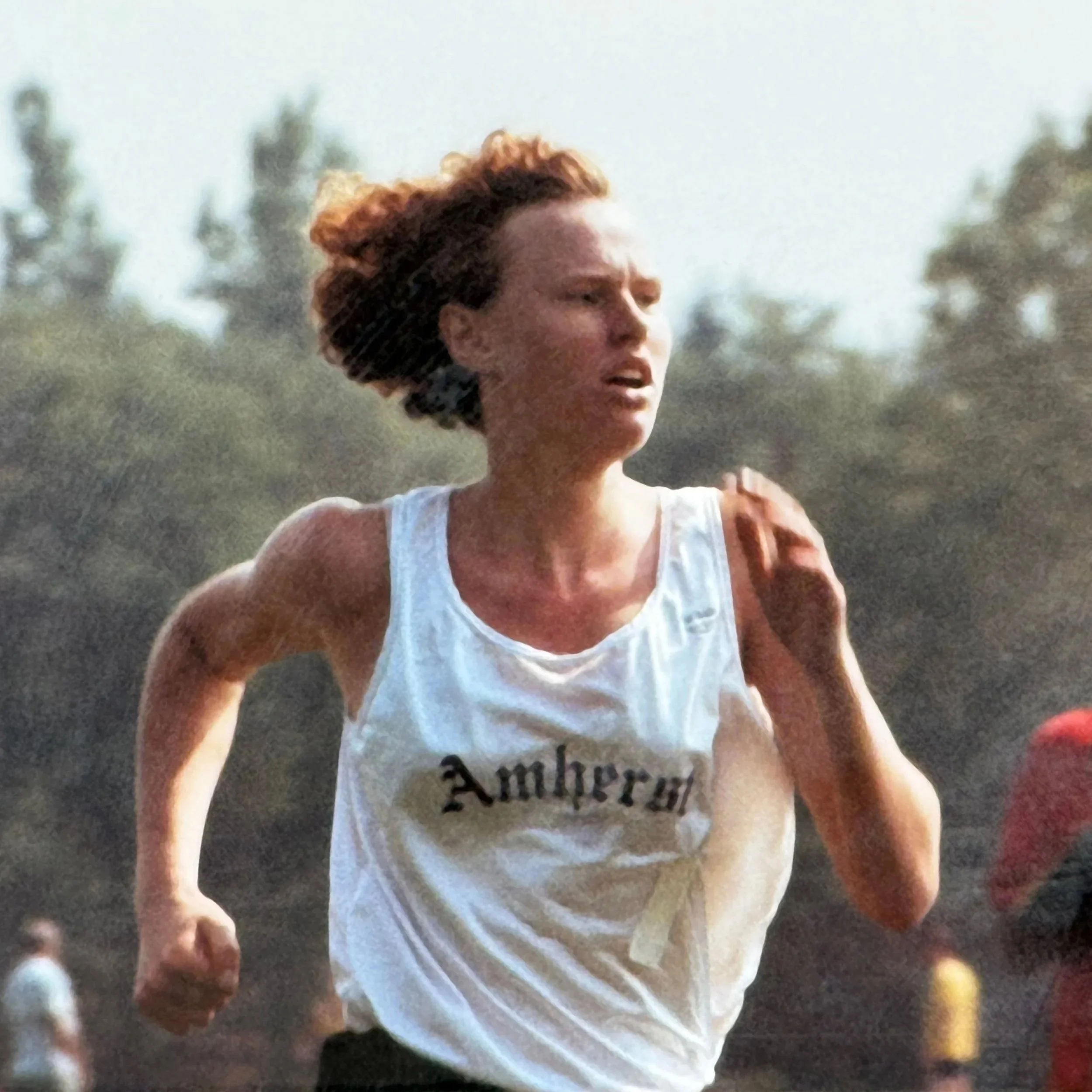
Photo courtesy of Stephanie Reents.
At some point, perhaps when I was in my early thirties and in graduate school in creative writing, I thought, ‘I really should write about running at some point.’ I wrote a short story my first year of graduate school that used the ‘we’ voice of the team that you find in the novel. The story was a failure. It didn’t have a plot, but it did have a lot of details from my running experience. I put that story aside for eighteen years or so and then eventually came back.
It was a wonderful experience to go back to all those experiences I’d had as a runner. The more you remember, the more you remember. So as I wrote into the experience of my cross country runners, I remembered more about what it was like to be on a team, what it was like to be preparing for a race, what it was like to be racing, and the strategies you might use in a race. Even though the book has some tragic elements in it, it was really such a pleasure to revisit that period of my life.
How much of your running during the drafting phase was going out to feel yourself into the momentum of the book?
I was running when I started writing this novel. And then I tore my meniscus. It was the fall of 2020, the very beginning of the pandemic. My husband and I would go and run around the track at Hope High School in Providence, Rhode Island, where we lived then. It was just so wonderful to be running again, and pretty pathetic, probably for most runners, because I'd run two or three miles around the track, but it was a wonderful way to end each day. So I wasn't necessarily using running in my writing process.
Although, I think the thing that I've learned from running over the years is patience. That's something I'm learning again right now, because I'm sort of tiptoeing back into running, and I'm realizing if I'm going to be a runner–I'm now 55–I'm going to have to slow way down. And that's hard for me. I'm a person who still thinks an eight minute mile is really slow. I might need to slow down to a 10-minute or 12-minute mile to really get back into running.
When I was training for [the New York City Marathon], I just remember when I was about to go out on a two hour run, there was no possible way to make the run go faster. You just had to get into the right frame of mind to make peace with the length of the run and all the things that you would feel during the run. The same is true of writing. You have to be patient. You have to open yourself up to surprise and disappointment and frustration. There's nothing that will make a novel write itself faster. You just have to show up every day and do the work. That's what running taught me, was to show up every day and do the work and be patient.
I'm curious, how has the reception of the “We Loved to Run” been? Have you heard from former cross country runners who have found the book resonant? I could see even current cross country teams using this book to talk about having healthy relationships with their bodies, with running, etc.
It's been so fun having the book in the world. I wasn't anticipating the fact that I would get to have so many conversations with women runners at all stages of their lives. I've heard from women coaches who've talked about how even though my novel is set in 1992, even into the 2000s and beyond, they saw some of the same issues around disordered eating, around coaches pressuring athletes to lose weight, or making subtle comments about their athletes’ bodies and how that affected individual athletes. I’ve talked to current coaches about some of the challenges they face coaching women.
I’ve also read a number of memoirs by women runners like Lauren Fleshman’s “Good for a Girl.” We would like to think that things have changed dramatically since the 1990s–and while I do think things have gotten much better in terms of women understanding the importance of fueling their bodies and understanding the negative impact of not eating enough, even if there are short term gains to be had from getting really lean, there are long term consequences in terms of injury and illness. It seems like there’s a lot more awareness of that. And yet, there are still coaches who comment on women’s bodies. There are still women who are struggling with disordered eating. So, things have changed, but they haven’t changed as much as they should.
What are you working on now?
I have a short story collection coming out. I've been revising a few of the stories in it. It was basically done in 2020, but it couldn't come out until after my novel was published. And so I'm revisiting stories that I haven't looked at since 2020 and that's really fun and exciting. I think once I figured out how to approach the stories in a very kind of open way, again, it's really interesting to go back into them.
If I write another novel, I'd like to write a backpacking novel. I love writing about the natural world. Even though the middle section of my novel is pretty tragic, I really loved writing the scenes that are set in the mountains of Idaho. Before I wrote that section, I came back to Boise and I went on a backpacking trip by myself. And my dad, who's no longer alive, helped me put out all my gear on the picnic table in just the same way we did when I was a kid, made sure I had everything and, you know, packed up. And he said, ‘If I don't hear from you by 4pm I'm calling the Ranger.’ So I had to make sure I did everything on time. But yeah, I love writing about the natural world, and so I'd love to write a backpacking novel about a mother and son going backpacking together, and perhaps things not working out quite the way they should, but that's about as much as I know.
Speed Work:
In one word, what would you say ‘We Loved to Run’ is about?
Friendship.
Where is your favorite place to run in Seattle?
Now that I'm running very slow miles, I am doing it along the bluff in Magnolia overlooking Elliot Bay.
Where is your favorite place to run anywhere in the world?
The foothills above Boise.
If you could go for a run with any of your characters, who would you run with?
Harriet. She's feisty and an interesting feminist. I think I'd have a lot of fun talking to her.
What are you reading right now?
I'm reading “Heartwood” by Amity Gaige, and I highly recommend it to everyone.
Learn something new? Find a new book you can’t wait to crack the spine of? Consider buying the columnist a coffee.
Writers Who Run is a monthly column by Seattle-based reader, runner, writer, and bookseller Malissa Rodenburg.